Hoarding and Addiction: Why Letting Go Is Harder Than You Think
This is the fifth
Ever wondered why some people can’t throw away old magazines—or why others can’t stop reaching for that next drink? Hoarding and addiction might look very different on the surface, but the struggles underneath are often the same: intense emotions, compulsive urges, and a search for comfort when life feels overwhelming.
Understanding this link helps us replace judgment with empathy—and opens the door to real, lasting change.
What Hoarding Is Really About
Hoarding isn’t just “being messy.” It’s a persistent difficulty letting go of possessions, regardless of their actual value. Items can represent safety, memories, identity, or control. The idea of discarding them can trigger genuine anxiety—sometimes panic—so clutter grows and spaces become hard to live in.
Common signs:
- Rooms so cluttered they’re hard to use (kitchen counters, bed, pathways)
- Strong distress or guilt about discarding
- Buying or picking up free items “just in case”
- Conflict with family or housemates over space and safety
Addiction: More Than a Bad Habit
Addiction—whether to substances, gambling, or even technology—isn’t about weak willpower. It’s about the brain’s reward system getting hijacked. The temporary relief or “rush” (often dopamine-driven) makes the behavior hard to stop, even when consequences are clear.
Common signs:
- Cravings and compulsive use
- Needing more to get the same effect
- Continuing despite harm to health, finances, or relationships
- Withdrawal symptoms or irritability when trying to stop
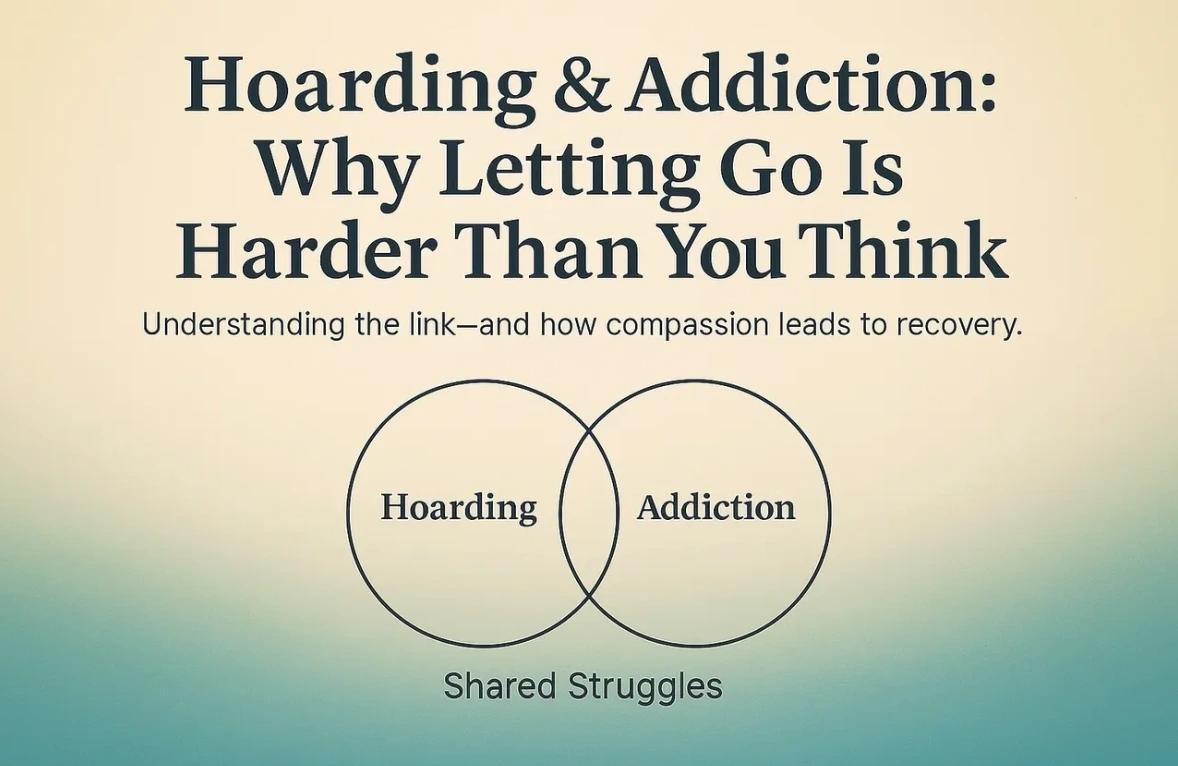
The Hidden Link Between Hoarding and Addiction
Here’s where the connection gets real:
- Compulsion: Strong urges to act—even when it causes harm
- Emotional regulation: Both can be used to self-soothe stress, anxiety, trauma, or loneliness
- Reinforcement loop: Short-term relief reinforces the cycle, making it tough to change
- Shame & isolation: Secrecy and embarrassment often keep people from seeking help
When underlying conditions like anxiety, depression, trauma, or ADHD are present, hoarding and addiction can co-occur—each reinforcing the other.
Why This Matters
Shifting from “Why don’t they just stop?” to “What pain are they trying to soothe?” changes everything. Compassion isn’t soft—it’s strategic. It creates safety, reduces shame, and makes change possible.
Practical Steps to Break the Cycle
1) Start small, consistently
Pick one space (or one behavior trigger) and make tiny, repeatable changes. Momentum beats perfection.
2) Therapy helps
- CBT (Cognitive Behavioral Therapy): Reframes unhelpful thoughts and builds skills
- Exposure with Response Prevention (ERP): Practice tolerating discomfort while resisting the urge
- Trauma-informed therapy: If trauma is part of the picture, specialized support matters
3) Support groups reduce isolation
Hearing “me too” is powerful. Group accountability and shared tools keep motivation steady.
4) Professional help for practical wins
- Professional organizers (trained in hoarding) can make decluttering safe and sustainable
- Addiction specialists guide medically safe withdrawal, coping skills, and relapse prevention
5) Build a safety net
Sleep, nutrition, movement, and connection aren’t “nice-to-haves.” They stabilize mood and reduce urges.
How to Help a Loved One (Without Making Things Worse)
- Lead with empathy: “I know this is hard. I’m here.”
- Ask, don’t tell: Collaborative questions (“What would feel okay to let go of first?”) beat commands
- Set clear, kind boundaries: Protect shared spaces and safety without shaming
- Celebrate micro-wins: Progress is often measured in inches, not miles
When to Seek Immediate Help
- Fire hazards, blocked exits, or sanitation risks at home
- Self-harm thoughts or severe withdrawal symptoms
- Substance use impacting safety (e.g., driving, caregiving, workplace risks)
Important: This article is for education, not diagnosis. Please connect with a licensed professional for personalized care.
FAQs
Is hoarding the same as collecting?
No. Collecting is organized and purposeful. Hoarding leads to clutter, distress, and loss of functional space.
Can you be addicted to “stuff”?
You can be compulsive about acquiring/keeping items. While not substance addiction, the reinforcement patterns can look similar.
Does cleaning everything at once help?
Rapid cleanouts often cause distress and rebound. Gradual, supported change is more sustainable.
Final Thoughts
Hoarding and addiction aren’t signs of weakness—they’re signs of struggle. With compassion, good tools, and the right support, letting go becomes possible—and life gets bigger than the urge to hold on.
If this resonates with you, save or share this post—and take one small step today. One conversation. One new habit. It counts.